
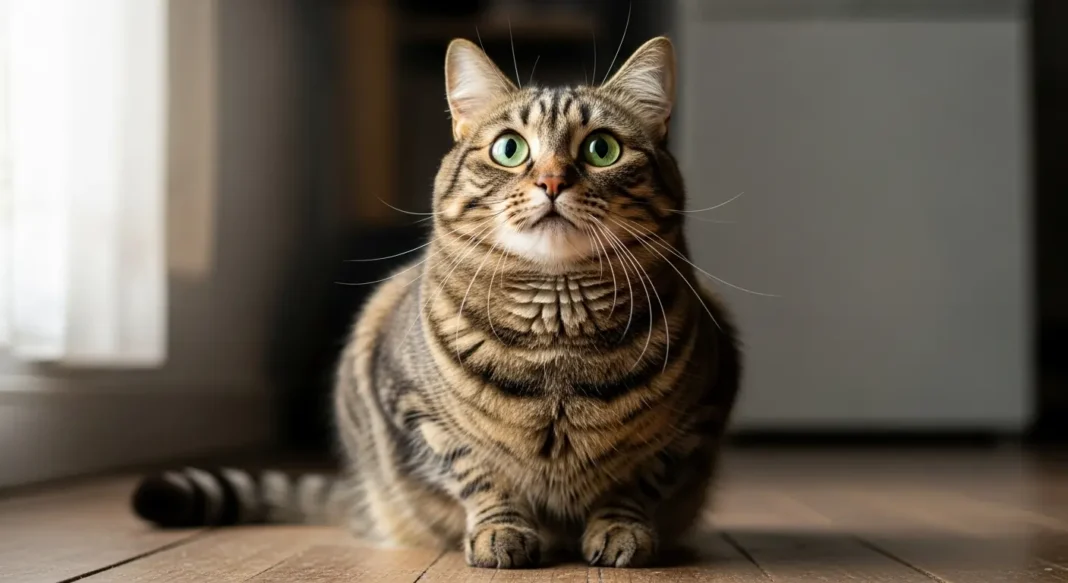
When it looks like your cat is staring at nothing, they’re often just tuning into something our human senses can’t grasp. They can pick up on the faintest sound of a mouse in the wall, or maybe just a single speck of dust floating in a sunbeam. Sometimes, they might just be zoning out and processing their world, much like we do when we find ourselves daydreaming.
It was the end of a long Tuesday, and I was doing a final check-up on a sweet, elderly ginger cat named Marmaduke. His owner, Eleanor—a thoughtful woman I’ve known for years—leaned in right in the middle of the check-up. “I have a silly question, Doctor,” is how she started. “It’s about Marmaduke’s staring. He just sits in the living room and stares so intently at the wall. You start to wonder if he’s seeing ghosts.”
I chuckled, because it’s a question I’ve heard a hundred times, and I’ve even asked it myself about my own cats. That unnerving, focused stare into what appears to be empty space is one of the most delightfully spooky things a cat can do. But while it’s tempting to think they’re seeing into another dimension, the truth is, they’re just using a set of high-performance sensory equipment that we humans can only dream of.
Hearing a World We Can’t
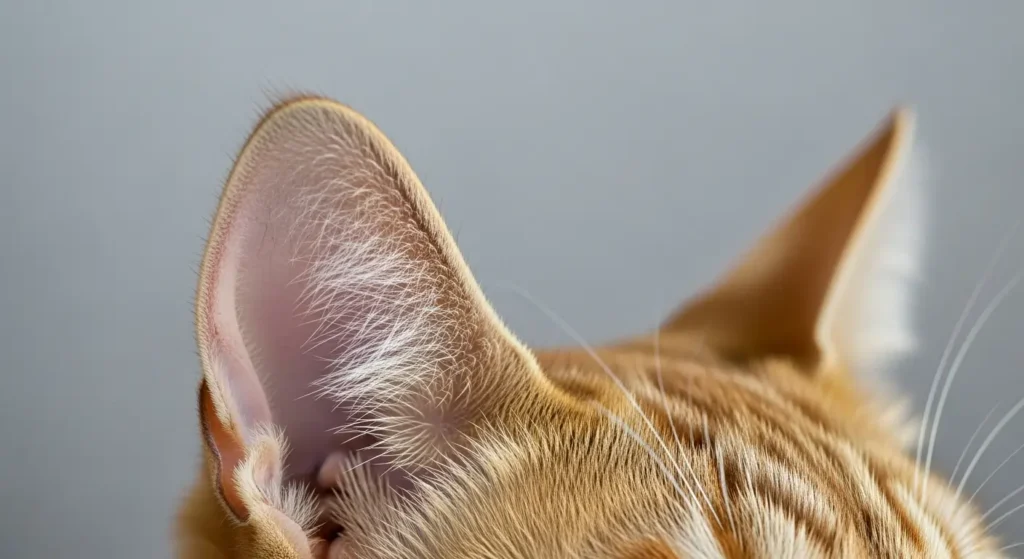
The most common reason for that “blank stare” almost always comes down to sound. You just have to remember their hearing is on another level entirely. Their ears are like satellite dishes, capable of swiveling and honing in on the tiniest, highest-frequency sounds. So when a cat stares intently at a wall, it’s not because they’re fond of the paint job. What are they picking up on? Who knows. A faint scuttling sound, maybe. The buzz of a fluorescent light that we stopped noticing years ago. Or maybe it’s something like the pipes in the wall.
I had a cat once, a little tabby, who would frequently sit in the kitchen and stare at a specific cabinet. For weeks, I thought it was just a weird quirk. Then one day, we had a plumber in for an unrelated issue, and he discovered a tiny, slow leak in a pipe behind that very wall, making a faint drip… drip… drip that was entirely beyond my range of hearing. My cat hadn’t been staring at nothing; she’d been monitoring the situation for weeks.
Seeing the Invisible
Beyond sound, there’s also their incredible eyesight. While we have better color vision, cats are masters of detecting movement. Their eyes are packed with rod cells, making them exquisite motion detectors, especially in low light. I sometimes wonder if they’re staring into that ‘void’ just watching a whole tiny drama play out that we’re completely missing.
It could be a tiny spider rappelling from the ceiling on a single thread. It might be a sunbeam catching a floating mote of dust, turning it into a fascinating, sparkling toy. I’ve seen my own cat become utterly transfixed by the subtle dance of shadows cast on a wall by a tree branch swaying outside the window. We see a blank wall; they see a complex light show.
Just Pausing to Think
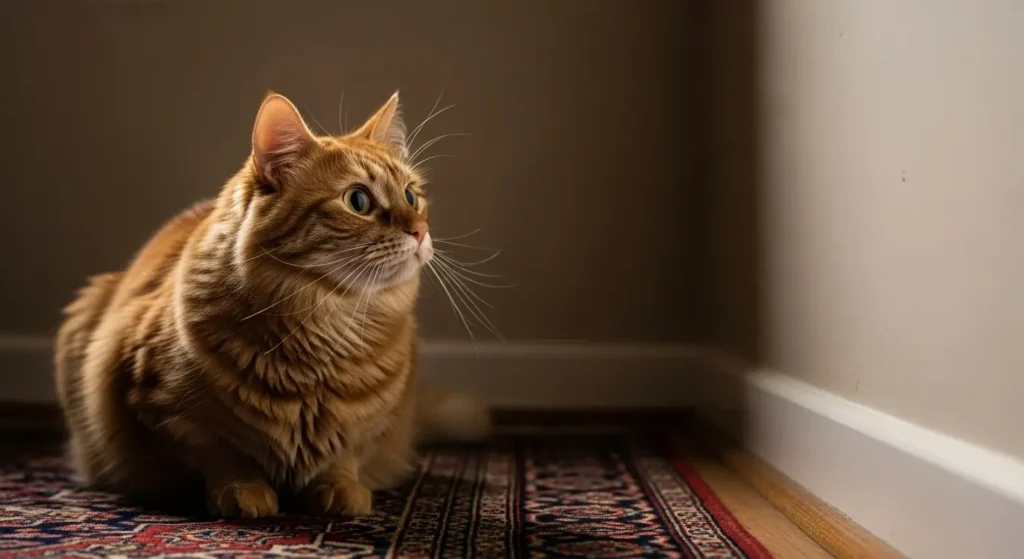
And sometimes, I have to admit, the reason might be a bit more mundane. I’ll catch myself doing it. Just staring off into space when I’m driving or in the middle of doing dishes. My brain’s not really engaged with what I’m seeing, it’s just… processing. Then I’ll look over at my cat, and he’ll be doing that exact same intense, empty stare, and I think, yeah. I get it. In the quiet moments between napping and wanting a meal, they might just pause. They could be replaying the events of their morning patrol, contemplating the bird they saw on the windowsill, or simply enjoying a moment of pure, meditative feline zen.
So, the next time you see your cat staring at the wall, don’t worry. They’re not seeing ghosts. They’re just listening to the secrets of your house, watching the universe’s tiny dancers, or perhaps, simply having a thought too profound for us mere humans to comprehend.